
Fibres · Animal
BFL Wool (Bluefaced)
A lustrous, hard-wearing English wool, springy and pleasant to knit. An excellent all-rounder: it combines the backbone of a longwool with the softness of a fine fibre, with a felting risk that is easier to manage than merino's.
Translated from Italian. A native knitter has not reviewed this translation yet.
History
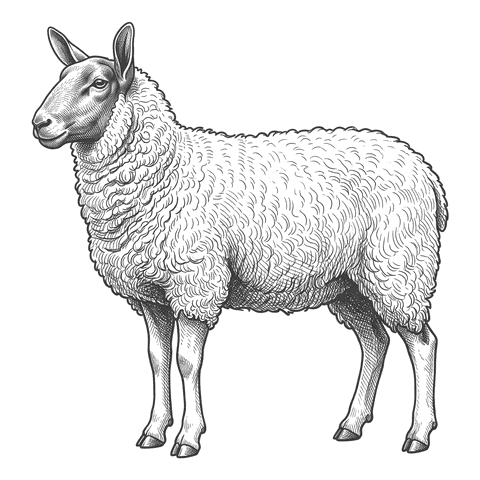
The Bluefaced Leicester was developed in the early twentieth century in the hills around Hexham, in Northumberland, as an evolution of the Leicester longwools bred by Robert Bakewell in the eighteenth century. The name comes from the dark skin of the face, which shows through the white hair on the head. Historically raised as a "sire" breed for commercial crosses, it has won over British craft knitting and is today one of the breed wools most loved by hand spinners.
How the yarn is made
It comes from the annual shearing of the fleece. The staple has tight, well-defined curls, the so-called "purl locks", which lend themselves above all to combing: they give smooth, lustrous, compact worsted yarns. Carding gives softer, bulkier woollen yarns instead, which dull the lustre a little but bring out the warmth.
Why it is prized
It is a rare meeting point between two worlds: it has the backbone, lustre and wear resistance typical of longwools, but with a fineness close to that of apparel wools, so it stays comfortable on the skin. The springy curl gives the knitted fabric good memory, and the lustrous surface makes textured stitches and cables stand out.
Dyeing
Excellent. As in all wools, keratin binds acid dyes strongly and evenly, and the fibre's natural lustre makes colours particularly vivid and deep. It takes both historical natural dyes and synthetic acid dyes well, with bright, wash-fast results.
Care
It resists pilling well when worsted-spun with medium twist. Hand wash or use a wool cycle, in cold water with a gentle detergent, then dry flat so it does not lose its shape. It felts with hot agitation, but with more margin than merino: the longer, more lustrous fibre forgives a little more handling before it takes.
End of life
Biodegradable and compostable when not superwash-treated. It can be mechanically recycled together with other wools, and the strength of the yarn also makes it suitable for being unravelled and reknitted several times before it ends its cycle.
How to recognise it
| Hand | Soft and springy, with a touch slightly cooler and more slippery than merino because of its lustre. Comfortable on the skin, without the prickle of coarse longwools. |
|---|---|
| Look | Semi-lustrous, with a silky sheen and a fine, regular crimp. The yarn reflects light and brings out the relief of the stitch. |
| Behaviour | It returns to shape after stretching, wrinkles little and resists abrasion well; it holds warmth while being less insulating than the loftier woollen-spun wools. |
| Burn test | Protein signature: burns slowly and self-extinguishes, smells of burning hair, and leaves a small black, crumbly bead. |
| Home tests | Burn test: slow flame, goes out by itself, crumbly ash · Wet stretch test: wool weakens when wet, plant fibres do not · Elasticity test: stretch and release; the fibre springs back |
| Confused with | Lustrous acrylic imitating it: but in the flame it melts into a hard bead and feels cold to the touch · Other lustrous breed wools such as Wensleydale or Teeswater, but those are coarser and have an even longer staple |
| Only in a lab | Telling Bluefaced Leicester apart from other wools with certainty and measuring its microns exactly requires laboratory microscopy (ISO 17751). |
Physical facts
| Property | Value | Source |
|---|---|---|
| elastic memory | High | research |
| sag | Low | research |
| halo | Low | research |
| felting risk | Medium | research |
| fineness (µm) | 24–28 | research |
| moisture regain (%) | 17.0 | measured |
| typical shrinkage (%) | 0–10 | estimate |
| staple length (mm) | 75–150 | research |
measured = a measurement with a reference · iso = a standard · research = a verified source · estimate = plausibility only
Good for
springy knitwear · cables and textured stitches · garments that need to last and spring back · shawls and garments that show off colour
Less good for
fluid, cool drape (better silk, linen or cotton) · maximum softness for sensitive skin (fine merino is better) · maximum fluffy halo (mohair is better)