
Fibres · Animal
Qiviut (musk ox)
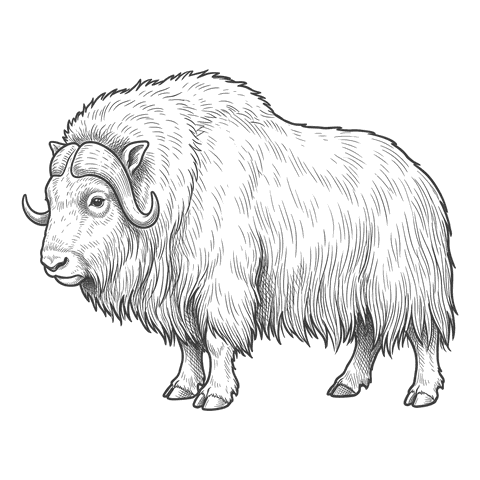
The Arctic fibre above all others: the undercoat of the musk ox, among the warmest and lightest there are. Very rare and precious, it does not prickle or felt, and it is perfect for small accessories and shawls of pure luxury.
Translated from Italian. A native knitter has not reviewed this translation yet.
History
Qiviut is the down the musk ox sheds during its spring moult, gathered by hand from tundra shrubs or directly from the fleece, never shorn. Working it is bound up with the Inuit communities of the Arctic: in Alaska the Oomingmak cooperative, founded in the 1960s, brings together native craftswomen who knit shawls and caps in traditional patterns, giving the fibre cultural as well as textile value. Tiny yields and remote origins have always made it one of the most expensive fibres in the world.
How the yarn is made
Only the soft undercoat is gathered by hand, without shearing, and then separated from the coarser guard hairs by long, patient dehairing. A single animal yields a few hundred grams of clean fibre a year: it is this scarcity, combined with the hand cleaning, that places it at the very top of the market. The resulting fibre is very short and very fine, and is usually spun into very fine counts.
Why it is prized
It combines extraordinary warmth with an almost weightless lightness: it traps air like very few other fibres, while staying thin and fine. Unlike wool it does not felt and hardly shrinks at all, and it pills much less than cashmere. It is very soft and does not prickle, so even the most sensitive can wear it right against the skin.
Dyeing
Being a protein fibre it takes acid dyes well, with good fastness. In practice, though, it is often left in its natural grey-brown colour: that is part of its value, and dyeing would risk covering up its story and origin.
Care
Surprisingly stable and easy: it does not felt, so it tolerates water better than any other wool. Still, hand wash it in cold water with a gentle detergent and dry flat, out of respect for the delicacy of the garment. It pills little, but the short fibre calls for well-made stitches so the fabric does not loosen over time.
End of life
It is a natural protein fibre, biodegradable and compostable at end of life. Because of its rarity and value, qiviut garments tend to be kept and handed down rather than discarded: the most sustainable route remains reuse.
How to recognise it
| Hand | Incredibly soft and light, warm to the touch far beyond what its weight would suggest. It does not prickle at all, not even on the most sensitive skin. |
|---|---|
| Look | Natural grey-brown colour, matt and without lustre. With wear it easily develops a soft, airy halo on the surface, its typical bloom. |
| Behaviour | Not very elastic: it tends not to recover after stretching, and sags very little under its own weight because it is so light. It does not felt, hardly shrinks, and holds warmth exceptionally well. |
| Burn test | Protein signature: it burns slowly with a smell of burning hair and leaves a crumbly black bead, like wool and cashmere. |
| Home tests | Burn test: slow flame, smell of burning hair, crumbly ash · Hot water test: it does not felt, unlike wool · Rarity and a very high price are in themselves a strong clue to authenticity |
| Confused with | Cashmere: a similar hand, but qiviut does not felt, pills less and is even rarer · Other fine wools and prized undercoats, practically indistinguishable by touch |
| Only in a lab | Confirming the species with certainty and distinguishing qiviut from other fine undercoats requires laboratory microscopy (ISO 17751). |
Physical facts
| Property | Value | Source |
|---|---|---|
| elastic memory | Low | research |
| sag | Low (extremely light) | research |
| halo | High | research |
| felting risk | Low (does not felt easily) | research |
| fineness (µm) | 11–18 | research |
| moisture regain (%) | 15.0 | estimate |
| typical shrinkage (%) | 0–1 | estimate |
| staple length (mm) | 40–70 | research |
measured = a measurement with a reference · iso = a standard · research = a verified source · estimate = plausibility only
Good for
luxury accessories such as cowls and caps · extremely light, warm shawls · small next-to-skin pieces · fine details blended with other luxury fibres
Less good for
large yardage, given the prohibitive cost · ribs and cuffs that must bounce back (low elastic memory) · garments that need structure and body